

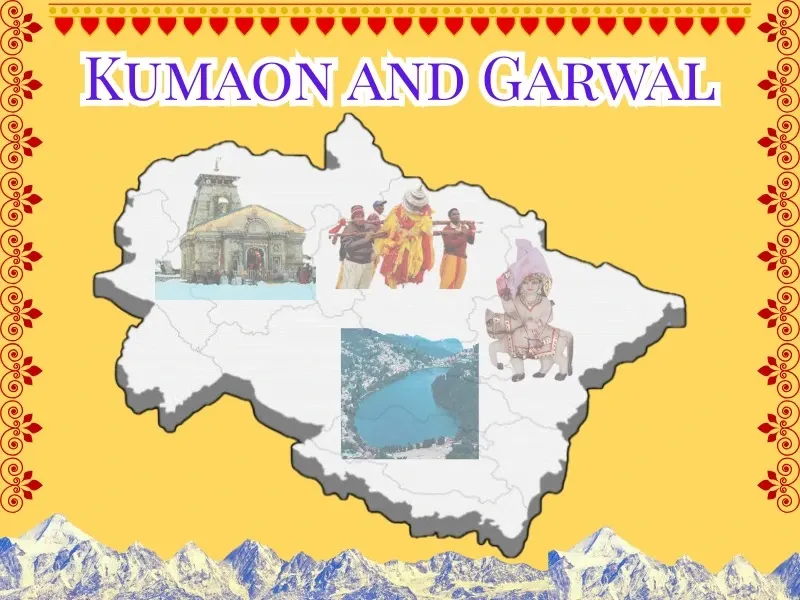
Introduction – Diversity and Unity of Uttarakhand
Uttarakhand, also known as the “Land of the Gods,” is a beautiful state located in the northern part of India. This state is full of natural beauty, spiritual places, and rich cultural heritage. The geographical form of Uttarakhand is very diverse – there are high Himalayan mountains, lush green valleys, serene lakes, and fast-flowing rivers. This is the reason why the state has always been a center of attraction for tourists and travelers.
Uttarakhand is mainly divided into two historical and cultural regions – Kumaon and Garhwal. Kumaon includes places like Nainital, Ranikhet, Almora, and Pithoragarh, while Garhwal includes famous destinations such as Rishikesh, Haridwar, Devprayag, Uttarkashi, and Badrinath. Both regions have their own distinct history, traditions, and folk culture, but together they form a rich and shared identity of Uttarakhand.
The cultural and natural diversity of Kumaon and Garhwal is very fascinating. The valleys and lakes of Kumaon reflect peace and beauty, while the Himalayas and glaciers of Garhwal symbolize strength and grandeur. Though both regions differ geographically and historically, their folk life, traditions, festivals, and social values remain deeply connected.
The aim of this blog is to show that even though Kumaon and Garhwal are two separate regions, their shared identity and culture make Uttarakhand a strong and united state. Its natural beauty, historical heritage, and cultural diversity make this land truly unique.
Geography and Natural Beauty
The geography of Uttarakhand is extremely varied and charming. Tall Himalayan peaks, dense forests, beautiful valleys, and calm lakes all exist together here. This diversity makes the state special for nature lovers and mountaineers. The two main regions—Kumaon and Garhwal—are known for their distinct geographical features and breathtaking natural beauty.
Kumaon
Kumaon, one of the major and beautiful regions of Uttarakhand, is famous for its cool breeze, green forests, and snow-clad Himalayan peaks. The name originated from the ancient word Kurmanchal, meaning “the land of Lord Vishnu’s tortoise incarnation.” The history of Kumaon dates back to the 5th century BCE, and it was ruled by the Katyuri dynasty from the 7th to the 11th century. During the Mughal period, this area was an important center of minerals and resources, and it is also home to the Kumaon Regiment of the Indian Army, established in the 18th century. The local people are known as Kumaoni, who speak the Kumaoni language, and Almora is considered the cultural capital of the region.
Major Tourist Destinations
- Nainital – Famous for its lakes and hill station charm
- Almora – Known for its culture and traditional sweets
- Ranikhet – Green landscapes and ancient temples
- Kausani – “Switzerland of India,” with magnificent Himalayan views
- Jim Corbett National Park – A paradise for wildlife lovers
- Mukteshwar – Offers scenic mountain views
- Pithoragarh – Known as “Mini Kashmir”
- Glacier Treks – Pindari, Sunderdhunga, and Kafni glaciers
Garhwal
Garhwal, another major region of Uttarakhand, is called the “Land of Forts” and is famous for its historical and spiritual significance. The name originated in the 14th century when King Ajay Pal unified 52 forts. The Garhwal division includes seven districts – Chamoli, Dehradun, Haridwar, Pauri Garhwal, Rudraprayag, Tehri Garhwal, and Uttarkashi, with Pauri as the administrative headquarters. In ancient times, the region was known as Kedarkhand, and in the 8th century, Adi Shankaracharya established many holy temples here. The local people are known as Garhwali, and they speak the Garhwali language. Garhwali culture is famous for its folk art, songs, and dances, and the people are known for their simplicity and hard work.
Major Tourist and Religious Places
- Char Dham Yatra – Garhwal is also called Devbhoomi because the four sacred pilgrimage sites—Badrinath, Kedarnath, Gangotri, and Yamunotri—are located here. Millions of devotees visit these places every year.
- Rishikesh – A major center of yoga and meditation, also known as the “Yoga Capital.”
- Mussoorie – A popular hill station, called the “Queen of Hills.”
- Tehri Dam – The tallest dam in India, located in the Tehri district.
- Auli – A famous skiing destination surrounded by snow-covered mountains.
- Valley of Flowers – A UNESCO World Heritage Site known for its colorful variety of flowers.
- Haridwar – A major pilgrimage site where the Ganga River enters the plains.
Similarities in Natural Beauty of Both Regions
Although the geographical features of Kumaon and Garhwal are different, their natural beauty shows many similarities. Greenery, mountain life, water sources, and quiet waterfalls add charm to both regions. The mountain rivers and valleys of both areas are vital for local life and play an important role in promoting tourism.
Culture and Traditions
The culture of Kumaon and Garhwal is like the cool mountain breeze and the sweetness of waterfalls—vibrant, lively, and full of celebration. The people here use the bright colors of the hills in their clothing and lifestyle. Women wear colorful sarees, pichora, and traditional ornaments, while men wear caps and dhoti-kurta reflecting their mountain style. Even while working in the fields, people follow traditional customs that reflect unity and community spirit.
Festivals and fairs are the soul of their culture. In Kumaon, people celebrate local fairs and festivals with great enthusiasm, while in Garhwal, local festivities hold a unique charm. Whether it’s Holi, Baisakhi, Uttarayani, or village fairs, people sing jhoda and folk songs with joy. These occasions fill every home with music and dance, creating social harmony and connection.
Music and dance are an inseparable part of life here. Jhoda and Chholiya dance symbolize collective joy, and devotional songs connect people emotionally. Whether in the valleys of Kumaon or the high peaks of Garhwal, folk music and dance are celebrated with equal energy and excitement.
The cultural unity of Kumaon and Garhwal is clearly visible in their songs, dances, fairs, and attire. Even if the mountains and villages are far apart, their people, festivals, and traditions remain connected. This is the true cultural richness and mountain unity of Uttarakhand.
Language and Literature
The identity of Kumaon and Garhwal also reflects in their languages and literature. In Kumaon, people speak Kumaoni, while in Garhwal, Garhwali is common. Both belong to the Hindi family but differ in pronunciation, vocabulary, and idioms, representing the lifestyle of mountain regions.
These languages play a vital role in folk life. Folk tales, proverbs, and songs are passed down from generation to generation. Rural stories, life lessons, and ancient events are preserved in these oral traditions.
In literature, both regions show common themes. Poems and prose often revolve around nature, mountain life, festivals, and religion. Descriptions of the Himalayas, greenery, and rivers appear repeatedly, connecting Kumaon and Garhwal culturally.
Thus, both language and literature reflect shared experiences and the mountain spirit, strengthening Uttarakhand’s cultural unity.
Historical and Religious Heritage of Kumaon and Garhwal
Both Kumaon and Garhwal are not only known for their natural beauty but also for their rich historical and religious heritage. The hills still echo with the stories of ancient dynasties, temples, and forts.
Historical Heritage
Ancient Dynasties and Kingdoms
- Kuninda Dynasty: One of the earliest and most significant dynasties of Uttarakhand, dating back to the 2nd century BCE. It laid the foundation for early mountain settlements.
- Katyuri Dynasty: In the 7th century, King Vasudev of the Katyuri dynasty united many small kingdoms and founded the Kumaon empire.
- Chand Dynasty: In the 10th century, the Chand dynasty expanded Kumaon’s territory and built many temples and forts.
- Tehri State: In the Garhwal region, the Panwar rulers established the Tehri Kingdom, which left a deep mark on local administration and culture.
Historical Structures
- Forts and Palaces: The Chand rulers built several forts and palaces across Kumaon and Garhwal, which still tell stories of ancient times.
- Lakhudiyar Caves: Evidence of Stone Age settlements found in Kumaon. The rock shelters of Lakhudiyar bear ancient human art and carvings.
Religious Heritage
Ancient Temples and Pilgrimage Sites
- Jageshwar Dham: A group of temples dedicated to Lord Shiva, showcasing exquisite architecture and stone carvings.
- Katarmal Sun Temple: Near Almora, this temple is dedicated to the Sun God and is famous for its ancient design.
- Golu Devta Temple: Many temples in Kumaon are dedicated to Lord Golu, the God of justice. The Chitai Golu Temple is especially famous.
- Nanda Devi Temple: Built by the Chand kings in Almora, this temple is linked with the sacred Nanda Devi mountain.
- Other Temples: Binsar Mahadev, Kasar Devi, Bhimeshwar, and several smaller temples enrich the region’s religious heritage.
In Garhwal:
- Badrinath Dham: Dedicated to Lord Vishnu, located on the banks of the Alaknanda River.
- Kedarnath Dham: A Jyotirlinga temple of Lord Shiva, nestled in the Himalayas.
- Gangotri and Yamunotri Dhams: The origin places of the sacred rivers Ganga and Yamuna.
- Tungnath and Madhyamaheshwar Temples: Part of the famous Panch Kedar temples.
- Jwalpa Devi, Dhari Devi, and Chandrabadni Temples: Important Shakti Peeths of the Garhwal region.

Mountains and Lakes
- Nanda Devi Peak: One of the highest Himalayan peaks of Kumaon, both naturally and spiritually significant.
- Nainital, Bhimtal, and Naukuchiatal: Famous lakes that hold both tourist and religious importance.
Local Deities and Folk Beliefs
Every mountain, river, and lake in Kumaon and Garhwal is associated with some deity or legend. Major deities include Nanda Devi, Golu Devta, and Sunanda Devi.
Nanda Ashtami: A major festival in Kumaon dedicated to Goddess Nanda Devi. It includes grand fairs and rituals that bring communities together.
Food and Local Cuisine
The food of Kumaon and Garhwal reflects their geography and local produce. Simple, healthy, and full of flavor, these dishes are prepared with traditional methods and local spices.
Kumaon Cuisine
- Bhatt ki Churkani (Dubke): Made from black soybeans, cooked with spices and herbs.
- Kafuli (Kaapa): A nutritious curry made from spinach, methi, and lai leaves.
- Kumaoni Raita: Made with cucumber and curd, seasoned with mustard and turmeric.
- Bal Mithai: The most famous sweet of Kumaon, made of roasted khoya and covered with sugar balls.
- Singori: Cone-shaped sweet made from khoya wrapped in malu leaves, mainly from Almora.
Garhwal Cuisine
- Phanu: A thick curry made from gahat (horse gram) dal.
- Chainsoo: A popular dish made from roasted black urad dal.
- Mandua Roti: Ragi-based bread, rich in nutrients.
- Thechwani: A curry made by crushing vegetables like radish and potatoes in a mortar.
- Kandali Saag: Prepared from the stinging nettle plant, rich in medicinal properties.
Dishes Common in Both Regions
- Aloo ke Gutke: Fried potatoes with mountain spices.
- Bhang ki Chutney: Tangy chutney made from roasted hemp seeds, cumin, and lemon.
- Jhangora ki Kheer: Traditional sweet pudding made from local millet.
- Arsa: Sweet dish made from rice flour and jaggery, served on special occasions.
Handicrafts and Art
The identity of Uttarakhand lies not only in its culture and nature but also in its traditional handicrafts. The art of Kumaon and Garhwal beautifully represents the local lifestyle, faith, and environment.
Kumaon Handicrafts
- Pichora: Traditional woven clothes made by women, especially the yellow and red Pichora used during weddings and rituals.
- Wood Carving: Exquisite carvings on doors, windows, and temples.
- Copper and Brass Work: Artisans in Almora make decorative and functional items.
- Aipan Art: Traditional ritual art made using rice paste on floors and walls with geometric and religious designs.
Garhwal Handicrafts
- Wood Carving: Similar to Kumaon, with designs of flowers, birds, and mythological figures.
- Ringaal Products: Eco-friendly baskets and mats made from a special bamboo-like plant.
- Jute Craft: Handbags, baskets, and idols made by women’s self-help groups.
- Metal Craft (Tamta Art): Copper and brass utensils and decor items crafted by the Tamta community.
Unity in Art
Although art styles differ regionally, both share a common essence – the depiction of mountain life and faith. Kumaon’s Aipan and Pichora, and Garhwal’s wood and metal crafts together form one Uttarakhandi identity.
Unity of Kumaon and Garhwal
Even though Kumaon and Garhwal differ in geography, language, and traditions, their unity has always strengthened Uttarakhand’s identity.
Shared Culture Despite Historical Differences
Though there were historical conflicts, shared traditions kept them connected. Wedding customs, faith in deities, and folk songs like Jhoda and Chanchari are celebrated equally in both regions. This shared culture shows that hearts remain united despite diversity.
Example of Unity – Nanda Devi Raj Jat Yatra
The Nanda Devi Raj Jat Yatra, held every 12 years, is the biggest symbol of unity. The 280 km pilgrimage includes devotees from both regions. Nanda Devi is worshipped as the daughter of Kumaon and daughter-in-law of Garhwal, reflecting deep emotional unity.
Helping Each Other in Natural Disasters
Being a mountain state, Uttarakhand often faces disasters like earthquakes and floods. During such times, people from both regions stand together. The 2013 Kedarnath tragedy is one example when the entire state supported Garhwal. Similarly, Garhwalis help Kumaon in times of crisis.
Uttarakhandi Identity – A Blend of Both
The Pichora of Kumaon and the Topi of Garhwal, Bal Mithai and Mandua Roti, the temples of Jageshwar and the Char Dhams—together these form one beautiful cultural heritage.
Thus, Uttarakhand is not just two regions but one emotion, one culture, and one family born from the unity of Kumaon and Garhwal.
Conclusion
Kumaon and Garhwal, the two major regions of Uttarakhand, are known for their unique geography, history, and folk culture. Kumaon is famous for its lakes, temples, and the legacy of the Katyuri and Chand dynasties, while Garhwal is known for the Char Dham pilgrimage, Himalayan peaks, and the Tehri royal heritage. Both regions have distinct identities but share one soul – the Uttarakhandi spirit.
Both have contributed equally to modern Uttarakhand – in education, literature, art, military service, and cultural heritage.
Today, it is essential that we preserve this shared unity of geography, culture, and society. Together, Kumaon and Garhwal create the identity of Devbhoomi Uttarakhand, admired by the world with reverence and love.
Read This – What is Aipan Art? | Indian Folk Art